
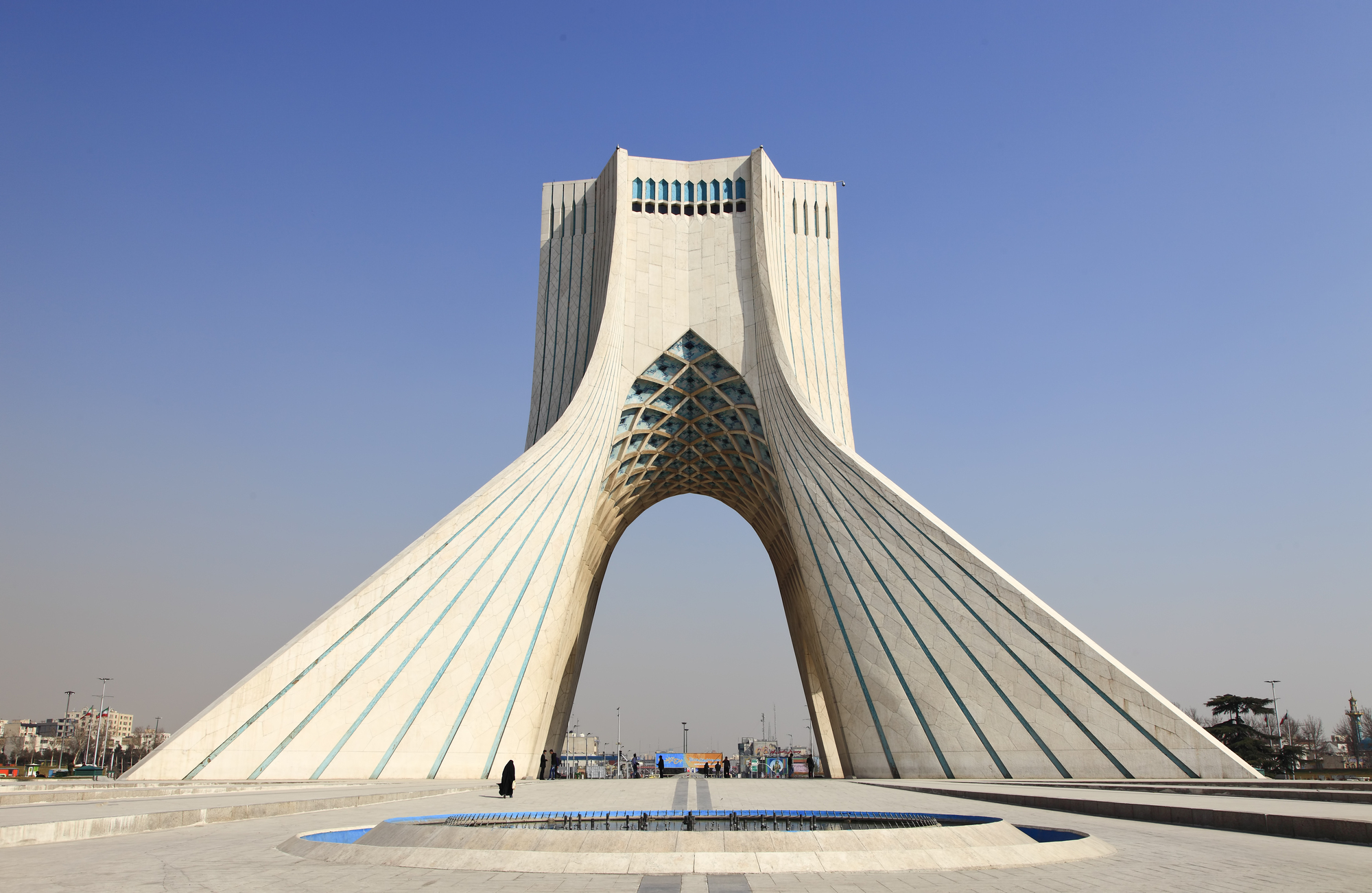


President Obama has set a constructive new tone for trying to engage Iran. He told an Arabic-language TV network: “If countries like Iran are willing to unclench their fist, they will find an extended hand from us.” And he showed refreshing humility after the Bush administration’s arrogance: “Americans are not your enemy. We sometimes make mistakes.”
The Board Blog
 Additional commentary, background information and other items by Times editorial writers.
Readers' Comments
Share your thoughts.
President Bush’s failed policies have left Iran both frighteningly close to mastering the skills needed to build a nuclear weapon and with enormous regional influence. The new administration will have to deal with Iran in a broader context, not just on the nuclear issue but also on Afghanistan and Iraq.
We don’t know if there is any mixture of incentives or sanctions that can wean Iran of its nuclear ambitions. But we are certain that the Bush administration never tried to find it. This means not only direct talks, but also far more persuasive diplomatic incentives, including a credible offer of improved relations and security guarantees. Cooperation with Britain, France and Germany remains essential — and a much stronger push to try to bring the Russians and Chinese along.
We are not going to minimize the difficulties. Iran’s scientists are working aggressively to master nuclear fuel production — the hardest part of building a weapon. They just put a satellite in orbit, a sign that their ballistic missile program is also moving ahead. It is difficult to read the politics in Tehran, but we are certain that hard-liners will try to sabotage any opening that would require making concessions on either program.
There will also be strong voices in Washington arguing against any compromise and some even for military action — a disastrous course. Iran’s support for Hamas and Hezbollah, its threats against Israel and its abysmal treatment of its citizens will only amplify those voices.
But we have seen the results of the Bush administration’s refusal to engage. It is time to at least test Tehran’s intentions on all fronts.
That may be easier if the agenda for talks is broadened to include Afghanistan and Iraq. In 1998, Iran’s fundamentalist Shiite-led government nearly went to war with Afghanistan’s Sunni fundamentalist Taliban. After the United States ousted the Taliban in 2001, Tehran played a constructive role, helping Washington and others establish a new government in Afghanistan. That limited collaboration quickly soured and Iran has been accused of providing some support for the Taliban in an attempt to keep the Americans off balance. Mr. Obama needs to remind Iran that it is in its clear interest for the Taliban to be defeated and Afghanistan stabilized.
Iran’s relationship with Iraq — where Shiites allied with Tehran hold key leadership positions — is much more complicated. Analysts debate how much control Iran is seeking there and how much effort it is currently making to constrain extremists. But like the United States, Iran cannot possibly want Saudi Arabia, Turkey and other neighbors grabbing for pieces of Iraq when American troops leave. Mr. Obama can make a compelling argument that it is in Iran’s strategic interest to join regional negotiations intended to guarantee Iraq’s long-term stability and sovereignty.
Mr. Obama is not presuming Tehran’s good will. Aides say he personally persuaded the Treasury Department’s Stuart Levey, who looked for creative ways to implement Mr. Bush’s sanctions policy, to stay on.
Secretary of State Hillary Clinton is expected to name Dennis Ross to oversee the Iran effort and integrate it with a broader strategy for Iraq, Afghanistan and the region. Mr. Ross, who spent years trying to negotiate an Israeli-Palestinian peace, has a deep appreciation for history and a reputation for never giving up. All that and more will be needed to try to make this work.